Wednesday, November 5, 2014

The Immortal Life of Henrietta Lack Chapter 21-24

Discussion Questions for Chapter 21-24

Chapter 21
1-What can we deduce from Rebecca's first meeting with Sonny Lacks about his character?
2-Why do Sonny and Lawrence keep repeating "That's a miracle"?
3-What does David Lacks think about all that Henrietta's cells have done?
4-What do the Lacks think that the Hopkins doctors did to black people?
5-What is the Lacks family's biggest complaint about how they have been treated by the Hopkins doctors?

Chapter 22
6-Why didn't the surgeons honor Gey's request to have his body donated to research?
7-Did Gey benefit from research he lent his body for?
8-What was the purpose of President Nixon's National Cancer Act?
9-How did Henrietta's name become public?
10-Should Henrietta's name have been released at all?

Chapter 23
11-How did Bobbette find out about HeLa cells?
12-Why did researchers want DNA from the Lacks family?
13-What was the role of informed consent in the Lack's encounters with the Hopkins doctors?
14-What were Deborah's fears about her mother's cells being alive?
15-What is the significance of Hsu's request?

Chapter 24
16-Why did Rogers go looking for the Lack's family?
17-How did Rogers discover Henrietta's real name?
18-Did George Gey profit from his research with HeLa cells?
19-Why did Deborah start researching her mother's cells?
20-Should McKusick and Hsu have published the information about the Lack's family?

Friday, October 31, 2014

Planeria Quiz

QUIZ


QUESTIONS

1. What type of symmetry does the dugesia have?
radial 
bilateral 
asymmetry

2. What term is used to describe how a planarian can regrow its body parts?
regeneration 
fission 
cephalization

3. Which of the following is associated with the planarian's nervous system?
flame cells 
diffusion 
ganglia

4. Asexual reproduction can occur through a process called:
transverse fission 
binary fission 
cocooning

5. A hermaphrodite is an animal that:
can asexually reproduce 
can regenerate 
has both male and female parts

6. The dugesia belongs to the phylum:
platyhelminthes 
planaria 
turbellaria

7. How could a a person catch a dugesia?
using a net to siphon them from the surface of the water
using a hook and raw liver to attract them

8. An animal that has no internal body cavity to hold organs is called a(n):
turbellarian 
hermaphrodite 
acoelomate

9. How does the dugesia obtain oxygen?
diffusion 
through gills 
with its flame cells

10. The dugesia will tend to stay in what areas?
dark 
light 
warm

The Immortal Life of Henrietta Lacks Chapter 17-20

Timeline (20 events between Ch17-20)

Ch17
1-Chester Southam tested for negative effects of HeLa cells on cancer patients
2-The test subjects quickly grew nodules 
3-Southam got 150 volunteers from Ohio prison
4-Prisoners had increased immunity to cancer
5-Southam began to inject gynecology patients 
6-Because of Southam's fault of not giving the subjects informed consent, his staff refused to help inject subjects. 

Ch 18
7-HeLa cells went up with the second satellite ever in orbit by the Russian space program in 1960.
8-Lewis Coriell published an article saying HeLa cells contaminates other cells and makes them act identically to HeLa. 
9-In 1960, French scientists discovered somatic cell fusion. 
10-In 1965, two British scientists Harris and Watkins fused HeLa cells with mouse cells
11-PR for cell culture made worsened after people thought the HeLa-mouse fusion would form a "mouse-man."

Ch19
12-Deborah Lacks for pregnant with Alfred "Cheetah" Carter's baby
13-Joe killed Ivy and turned himself into prison. He served 15 years. 
14-Deborah and Cheetah married. He became abusive, committed adultery, and was irresponsible. 
15-Deborah took the children and left Alfred. 

Ch 20
16-In September 1966, Stanley Gartler vied that scientists were simply growing and regrowing HeLa when they thought they were creating human tissues. 
17-T.C Hsu from University of Texas reports suspicions of cell-line contamination. 
18-Robert Chang from Harvard University refuted Gartler's claim by explaining that he grew cells from his daughters amniotic sac, and neither he nor his wife have the generic marker G6PD-A. 
19-The debate over the HeLa bomb begins. 
20-Scientists develop genetic tests and were led to Henrietta's family. 

Friday, October 24, 2014

Iron Deficiency Anemia


Disease anemia- pick an anemia, describe symptoms, treatment, prognosis, include a picture and reference

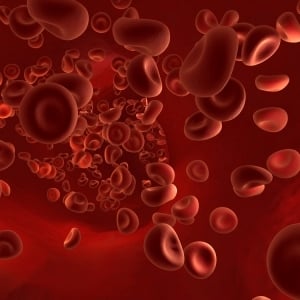
bloodIron deficiency anemia is the most common type of anemia and is usually caused by chronic blood loss by excessive menstruation. Moments in life such as growth spurts and pregnancy call for an increased demand in iron.

Some symptoms include tiredness, weakness, shortness of breath, glossitis, and rapid heart rate. In some instances, the patient suffers from a craving of strange food items such as starch, ice, and clay.


Mild to moderate cases of iron-deficiency can be treated with dietary improvement and iron supplements. Severe cases involve treatment in the hospital, blood transfusions, iron rejections, or intravenous iron therapy.


Close monitoring is needed to ensure that excessive iron supplements are not consumed as this can lead to toxicity, especially in children.


References:
http://www.health24.com/Lifestyle/Your-Blood/Anaemia-20130216-2

A Day In The Life of a Histologist


Career Histologist- describe a day in the life of, what training is required, salary, include a picture and reference


A histologist is one who detects, diagnoses, and treats diseases by analyzing cells and bodily fluids. They search for parasites, bacteria, and other microorganisms. They must be able to match blood for transfusion purposes and test drug levels in the blood that shows how a patient may be responding to treatment.


Histologists must have knowledge in using advanced computer software and lab equipment to analyze tissue. You only need an associates degree at minimum to become a histologist, but most have bachelor degrees in fields of medical technology or another type of lab science. Many employers require their applicants to be certified by the American Medical Technologist or National Credentialing Agency for Laboratory Personnel.


Salaries for histologists range from $26,430 to  $50,250, with the median being $32,840.


References:
http://diplomaguide.com/articles/Histologist_Career_Info.html

Liver Cancer

Disease cancer- pick a cancer, describe symptoms, treatment, prognosis, include a picture and reference


Most people don't have signs and symptoms in the early stags of primary liver cancer. When signs and symptoms do appear, they include weight loss, appetite loss, upper abdominal pain, nausea and vomiting, fatigue, abdominal swelling, jaundice, and white, chalky stools.

The type of treatment you get for liver cancer depends on the stage of cancer you have. Some examples of treatment include

-Surgery to remove a portion of the liver-best done if tumor is small
-Liver transplant surgery-only an option for early-stage cancer
-Freezing cancer cells-extreme cold can destroy cancer cells
-Heating cancer cells-heat from electric currents can destroy cancer cells
-Injecting alcohol in the tumor-alcohol causes the tumor to die
-Chemoembolization-the drugs can cut blood flow to cancer cells and all the cells receive are chemotherapy drugs
-Radiation therapy-high-powered energy can destroy cancer cells and shrink the tumors
-Targeted drug therapy-targeted drugs interfere with the tumor's ability to generate new blood vessels


Tests and procedures used to diagnose liver cancer include blood tests, imaging tests, and removing a sample of liver tissue for testing. Once liver cancer is diagnosed, the doctor will determine the stage, or extent of the cancer. Staging can be classified as Roman numerals I-IV or Alphabet letters A-D. Stage IV or Stage D is the most severe type of cancer.


References:
http://www.mayoclinic.org/diseases-conditions/liver-cancer/basics/definition/con-20025222

A Day In The Life of a Cell Biologist


Career cell biologist- describe a day in the life of, what training is required, salary, include a picture and reference


Cell biologists infect tissue culture cells with a type of bacteria, such as Salmonella, and analyze the cell in a number of ways. They compare it to uninfected cells, and observe the changes that happen to those cells. Nowadays, many cell biologists are focused on observing what cell reproduction can reveal about cancer. Other cell biologists create vaccines or work with food and cosmetic manufacturers. To be a cell biologist, you must have analytical skills, active listening and interpersonal skills, and math skills. You must also know how to use compueter software such as the graphical imaging software and spreadsheet software.

Cell biologists usually have a Ph.D in cell biology or a related field of biology. You don't need any years of training after you have your degree to be a cell biologist which means you can get a job right after getting your degree. 

The annual pay for a cell biologist is $66,260.


References:
http://www.ehow.com/about_6766583_do-cell-biologists-do_.html
http://education-portal.com/articles/Become_a_Cell_Biologist_Education_and_Career_Roadmap.html